What if the most dangerous part of a DeFi transaction is not the swap itself, but the permission you granted five minutes earlier? A wallet can display a polished confirmation screen, support many EVM networks, and still leave the user with a difficult question: what exactly can this smart contract do with my tokens now?
That question is central to using the Rabby browser extension responsibly. Rabby is designed for Ethereum and other EVM-compatible networks, and its appeal comes from putting more transaction context between a user and the “Confirm” button. But no wallet can repeal smart-contract risk, reverse a fraudulent approval, or guarantee that a cross-chain route will behave perfectly. The useful mental model is not “the wallet makes DeFi safe.” It is “the wallet can improve the quality of decisions made before signing.”
Myth One: A Token Approval Is the Same as a Token Transfer
It is not. Most ERC-20 tokens use an allowance system. When a decentralized exchange, lending protocol, or yield application asks for approval, you are usually authorizing a particular contract to spend up to a stated amount of a particular token from your address. The approval does not necessarily move funds immediately. It creates a permission that a later transaction may use.
This distinction explains why approval management matters even after a trade is complete. A user might approve a large or effectively unlimited amount of a stablecoin, swap a small portion, and forget that the allowance remains. If the approved contract is later compromised, upgraded in an unexpected way, or simply malicious, the outstanding permission can become relevant. The risk is conditional, not automatic: a contract still needs the ability and incentive to call the token’s transfer function. Yet leaving unnecessary permissions in place increases the number of failure paths.
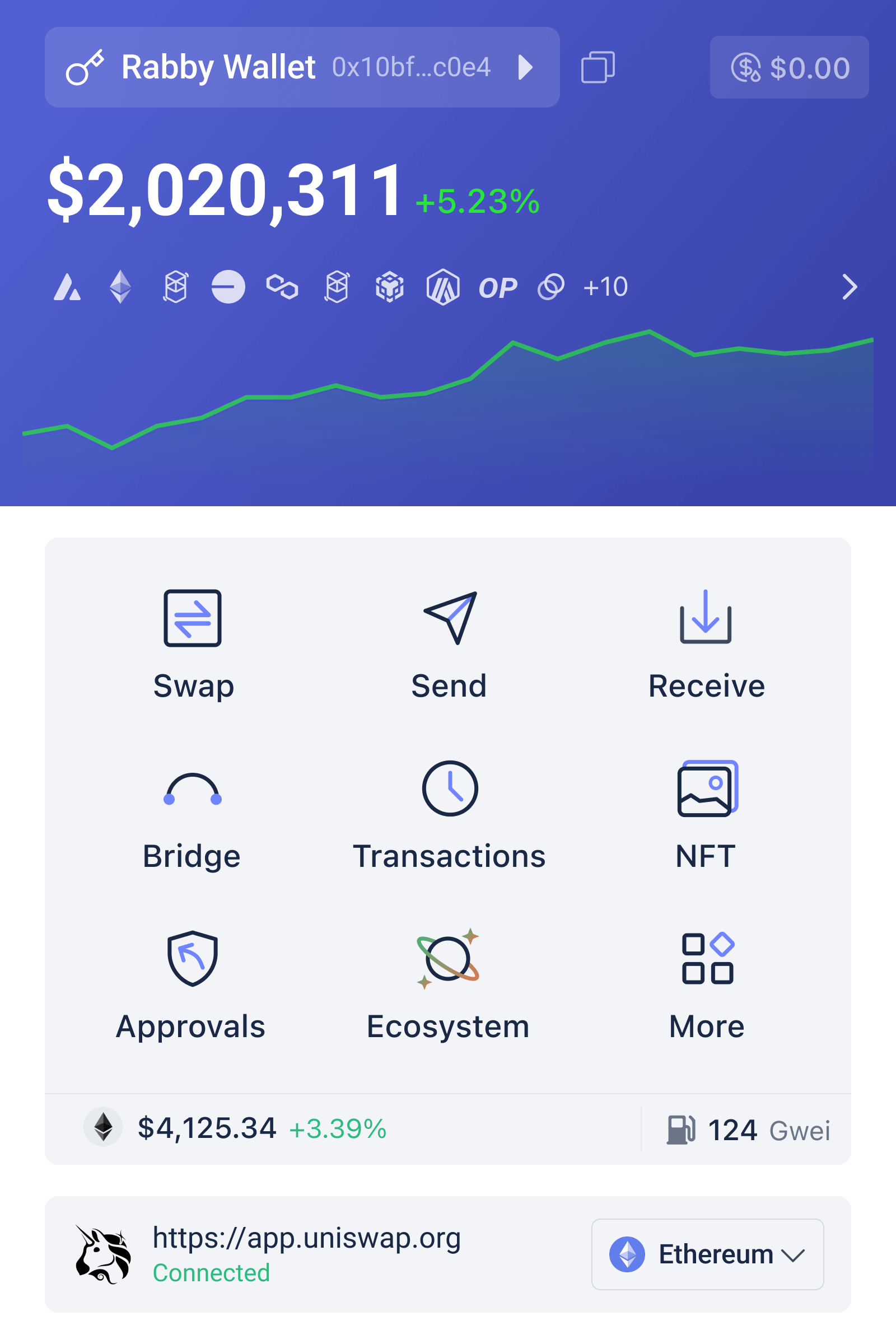
Rabby’s value here is best understood as visibility and review rather than magical protection. During installation, obtain the browser extension through a trusted source, such as the official rabby extension download page, and verify the extension identity before importing or connecting anything. A legitimate-looking website can still request an unsafe approval. The extension may help surface the network, contract, assets, and transaction effects, but the user remains responsible for checking whether the request matches the action intended.
Why “Unlimited Approval” Is a Trade-Off
Unlimited approval is often presented as a convenience feature. It can reduce the need to sign a new approval transaction for every future interaction, which may save time and gas. The trade-off is broader exposure. A limited allowance creates friction and may require another approval later; an unlimited allowance reduces friction while preserving a larger permission. Neither choice is universally correct, especially across unfamiliar protocols.
A practical rule is to treat approvals as access credentials. Use a limited allowance when interacting with a new, experimental, or infrequently used application. For a mature protocol that you use often, convenience may carry more weight, but review the contract and revoke allowances that no longer serve a purpose. Revocation itself is an on-chain transaction, so it costs network fees and does not erase historical activity. It changes future permission, not the past.
Myth Two: Seeing a Token Approval Means the Wallet Has Endorsed the Protocol
A wallet interface is not a regulator, auditor, or insurance policy. A transaction preview can help interpret calldata—the encoded instructions sent to a contract—and may warn about suspicious or unusual behavior. That is valuable because raw blockchain data is difficult for most people to read. Still, transaction simulation has boundaries. It models an expected execution under certain conditions; it cannot prove that a contract is honest, immune to governance changes, or safe under every future state.
For that reason, a sensible review separates three questions. First, what asset and amount are being authorized? Second, which contract receives the permission, and is it the contract users intended to interact with? Third, what will happen after signing, including whether the approval is followed by a swap, deposit, or another action? A familiar token symbol is not enough. Scam tokens can imitate names, and a real protocol’s front end can be compromised even when the underlying code has a different history.
This is also where address hygiene matters. A browser extension should be installed from a verified distribution path, and seed phrases should never be entered into a website, support form, or unsolicited pop-up. For larger balances, separating everyday DeFi activity from long-term holdings can reduce the consequences of a bad signature. That is not a Rabby-specific guarantee; it is basic compartmentalization, similar to not using one password for every financial account.
Myth Three: A Cross-Chain Swap Is Just a Swap on a Different Network
A conventional swap on one network usually involves exchanging one asset for another through a liquidity pool or a routing system. A cross-chain transaction adds a coordination problem: the source and destination networks have separate state, separate validators or sequencing arrangements, and often separate liquidity. What users call a “cross-chain swap” may combine a source-chain swap, a bridge or messaging step, and a destination-chain delivery or swap.
That structure creates risks that a normal token trade does not. The transaction can fail on the source chain, become delayed between networks, arrive as a different representation of the asset, or succeed on one side while requiring a recovery process on the other. Slippage, bridge fees, destination gas requirements, liquidity depth, and route-specific smart-contract risk all affect the result. A route that looks cheap in a quote can be less attractive after these variables are included.
Rabby’s multi-chain orientation can make network selection and transaction review easier for users moving among Ethereum and EVM chains. Recent project messaging dated August 24, 2026, emphasizes broad EVM coverage and a unified on-chain experience. That positioning is relevant, but coverage should not be confused with equivalence. EVM compatibility means contracts and tooling share important conventions; it does not mean every chain has the same security model, liquidity, bridge assumptions, fee market, or operational reliability.
Before confirming a cross-chain route, check the source network, destination network, token representation, expected amount, minimum received, estimated fees, and whether destination-chain gas is provided. A small test transfer can be rational when the route is unfamiliar. The limitation is obvious but often ignored: a wallet can show the intended route, yet it cannot control a third-party bridge’s contracts, validators, liquidity, or downtime.
A Reusable Pre-Sign Framework
For ordinary DeFi use, a four-part review is more useful than a vague instruction to “be careful.” Identify the action: approval, swap, deposit, withdrawal, or bridge. Identify the permission: what contract can spend what asset, and for how much? Identify the route: which network and token representation are involved? Finally, identify the exit: can you revoke the approval, recover from a failed transfer, or obtain destination gas if something goes wrong?
This framework also clarifies when to slow down. A small, familiar swap through a repeatedly used protocol may justify a quick review. A first-time approval for a new contract, an unlimited allowance, or a cross-chain route involving an unfamiliar bridge deserves deliberate inspection. The relevant question is not whether Rabby displays a warning. It is whether the warning changes your understanding of the transaction.
One forward-looking implication follows from this design problem. As wallets improve transaction simulation and approval dashboards, the competitive advantage may shift from merely supporting more chains to explaining state changes more clearly. That would be meaningful if the information is accurate, timely, and understandable. It would be less meaningful if users treat visual confidence as proof of protocol safety. The unresolved challenge is human attention: more data helps only when users can distinguish a permission from a transfer and a route estimate from a guarantee.
Rabby Wallet Extension FAQ
Does revoking a token approval recover funds already lost?
No. Revoking an allowance prevents or limits future spending by that contract, but it cannot undo a completed transfer. If assets were already moved through a malicious transaction, revocation is a containment step rather than a reversal mechanism.
Is Rabby safer than every other cryptocurrency wallet?
That conclusion is too broad. Rabby can provide useful transaction context and support for Ethereum and EVM activity, but safety also depends on the device, extension source, protocol, contract, private-key practices, and the user’s review of each signature. A better claim is that a context-rich wallet may help users make more informed decisions.
Should US users avoid cross-chain swaps?
Not necessarily, but they should account for technical and record-keeping complexity. Cross-chain activity can involve multiple transactions, fees, and token representations, which may complicate portfolio tracking and tax reporting. For US users, keeping transaction records and understanding the route is prudent; tax treatment depends on individual facts and current guidance.
The sharpest misconception to discard is that wallet security is a single product feature. In practice, it is a process of managing permissions, interpreting state changes, and limiting exposure when uncertainty is high. Rabby can be a useful part of that process, particularly for users navigating multiple EVM networks, but the final safeguard is still the decision made before signing.